Amoxycillin
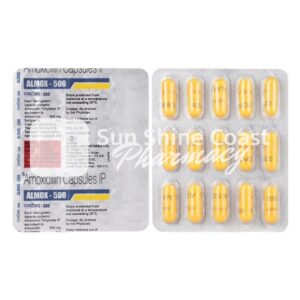
In brief
Amoxycillin contains amoxicillin. Common sites of bacterial infection, including the ears, sinuses and urinary tract, may be treated with amoxicillin when the bacteria are susceptible. This penicillin antibiotic works by weakening bacterial cell walls.
Amoxycillin (also spelt amoxicillin, the international name) is a penicillin-type antibiotic that kills susceptible bacteria and is prescribed for infections of the ears, throat, sinuses, chest, urinary tract, skin and more. Australian labels use the spelling amoxycillin, while most of the world writes amoxicillin; both names describe exactly the same active ingredient. The Amoxycillin on this card is the generic form, and a well-known brand is Amoxil, which has its own page: Amoxil
Amoxycillin in brief
| Item | Detail |
|---|---|
| Product | Amoxycillin (generic of Amoxil) |
| Active ingredient | Amoxicillin, written amoxycillin in Australia |
| Medicine group | Aminopenicillin antibiotic |
| Works against | Susceptible bacteria only, never viruses |
| Strengths listed here | 250 mg and 500 mg |
| Usual rhythm | Several times a day at even intervals; the length is set by the prescriber |
| Food | May be taken with or without food |
| Main caution | Penicillin allergy |
| Medicine status | Prescription medicine |
Is Amoxycillin right for you?
Amoxycillin is for bacterial infections that a doctor has assessed. Typical uses include middle ear infection, tonsillitis and throat infection, sinusitis, bronchitis and pneumonia caused by susceptible bacteria, urinary tract infections, some skin and soft tissue infections, dental infections and, in combination with other medicines, treatment of Helicobacter pylori in the stomach. It will do nothing for a cold, the flu, most sore throats caused by viruses or COVID-19, and using it for them only adds side effects and encourages resistant bacteria.
Talk to your doctor before starting Amoxycillin if any of these apply, and do not take it if a penicillin has ever caused you an allergic reaction:
- Any penicillin has previously caused an allergic reaction in you, such as a rash, swelling, wheezing or collapse. Some people who react to penicillins also react to cephalosporins, so say so.
- You have had liver trouble or jaundice after a penicillin.
- Glandular fever (infectious mononucleosis) is present or recent; it makes a widespread rash on amoxycillin more likely.
- Your kidneys work poorly; the dose or the gaps between doses may need to change.
- You have had severe diarrhoea after an antibiotic in the past.
- You are pregnant or breastfeeding. Amoxycillin is widely used in pregnancy, but your doctor should still confirm it.
How to take Amoxycillin
Take Amoxycillin exactly as prescribed, swallowing the capsule or tablet with a full glass of water. Doses are usually spread through the day at even gaps so that the level in the blood stays steady. In adults a typical pattern is 250 mg or 500 mg three times a day, with higher doses used for severe infections, and the dose for children depends on weight. The length of treatment depends on the infection and is set by your doctor.
- A meal does not block absorption, so Amoxycillin can go in with food whenever your stomach protests.
- Take each dose at similar times, for example morning, mid-afternoon and bedtime.
- If you miss a dose, take it when you remember unless the next dose is close; never take two together.
- Finish the course the doctor has set, even if you feel better, unless a doctor tells you to stop sooner. The reason is that stopping early can leave some bacteria alive. Leftover tablets must never be saved for the next sniffle.
- Keep drinking fluids, especially if you have diarrhoea.
If someone takes a lot more Amoxycillin than directed, expect mostly stomach effects such as nausea, vomiting and diarrhoea. Call the Poisons Information line on 13 11 26 for advice. If symptoms such as high fever, shortness of breath or swelling occur, seek urgent medical care. If your infection has not begun to improve after a couple of days of treatment, or it gets worse, go back to your doctor.
What Amoxycillin does to bacteria
Every bacterial cell sits inside a rigid wall, a kind of casing. To grow, they must constantly build and repair that wall, using enzymes called penicillin-binding proteins. Amoxycillin attaches to these enzymes and blocks the final step of wall construction. The weakened bacteria can no longer hold their shape and burst, so Amoxycillin is bactericidal (it kills) and not just a brake on growth.
Human cells have no cell wall, which is why penicillins are generally gentle on the body. Amoxycillin is absorbed well from the gut and reaches most tissues and body fluids, and it leaves the body mainly through the kidneys. Some bacteria make an enzyme, beta-lactamase, that cuts up amoxycillin; against those, doctors may prescribe amoxycillin together with clavulanic acid, which is a different product. Plain Amoxycillin does not work against viruses, fungi or the bacteria that produce this enzyme.
Amoxycillin side effects to know about
Most people tolerate Amoxycillin well. The effects seen most often involve the gut or skin:
- nausea, vomiting and loose stools or diarrhoea
- a mild, non-itchy rash that appears several days into treatment
- thrush in the mouth or genital area, because antibiotics disturb normal flora
- headache or a metallic taste
Stop Amoxycillin and get urgent help for a sudden allergic reaction: itchy raised rash (hives), swelling of the lips, face or tongue, wheeze, difficulty breathing, or collapse. Also seek medical help promptly for severe or bloody diarrhoea during or after treatment (possible Clostridioides difficile infection), blistering or peeling skin, jaundice, dark urine, unusual bruising, or a seizure. Do not take anti-diarrhoea tablets such as loperamide for severe diarrhoea on antibiotics unless a doctor says so.
Amoxycillin with other medicines, food and alcohol
Amoxycillin has fewer clashes than many antibiotics, but a few matter:
- Methotrexate: penicillins can raise methotrexate levels and the risk of toxicity.
- Warfarin: the blood-thinning effect may rise, so extra blood tests are often arranged.
- Probenecid: slows the removal of Amoxycillin and increases its level.
- Allopurinol: taken together, the two make a skin rash more likely.
- Mycophenolate: its blood levels can drop.
- Other antibiotics: bacteriostatic types such as tetracyclines may lessen Amoxycillin’s effect in some infections.
- The contraceptive pill: Amoxycillin is not known to switch it off, but vomiting or severe diarrhoea can; ask your doctor or pharmacist whether you need extra protection.
Alcohol does not directly cancel Amoxycillin, but it is wise to drink little while you are ill and recovering, and alcohol can worsen stomach upset. No special foods are prohibited.
Choosing between Amoxycillin and similar medicines
Amoxycillin is often a first-line antibiotic because it works across a broad range of common bacteria and is usually well tolerated. Phenoxymethylpenicillin (penicillin V) covers a narrower range and is often used for throat infections. Amoxycillin with clavulanic acid broadens the cover to bacteria that make beta-lactamase. For people allergic to penicillin, doctors turn to other families, for example doxycycline, azithromycin or, with caution, certain cephalosporins. Flucloxacillin is chosen for staphylococcal skin infections.
Which antibiotic is right depends on where the infection sits, the likely bacteria, local resistance patterns, your allergies and your kidney function, so it is not something to pick by self-diagnosis. If amoxicillin caught your eye because it was recommended for a friend’s illness, remember that your own infection may need a different drug or none at all. Where the brand is preferred, Amoxil has its own card, and generic Amoxycillin contains the same active ingredient.
Strengths and packs of Amoxycillin at Sunshine Coast Pharmacy
The Amoxycillin card lists two strengths, 250 mg and 500 mg. A 250 mg unit is a lower dose that suits milder infections, children’s dosing steps and people with reduced kidney function, while a 500 mg unit is the usual adult strength; two 250 mg units give the same total as one 500 mg unit if your doctor advises it. Packs begin at 30 units and run through six sizes up to 360. The price for each strength and pack is on the product card. Remember that a single course of Amoxycillin is usually short, so the largest packs will normally hold far more than one course needs, and leftover antibiotics should not be saved. Current availability and registration of products can vary, so check with your doctor or pharmacist before relying on a particular strength.
Keeping Amoxycillin at home
Keep Amoxycillin capsules or tablets in the original pack, in a cool, dry cupboard below 25 degrees Celsius, away from damp bathrooms and out of reach of children. Moisture and heat reduce potency. Check the label for the expiry date, and do not use anything past it. Any tablets that remain after a finished course, or that are out of date, should go back to a pharmacy for disposal, not into the bin or down the sink, so that leftover antibiotics do not end up in the environment.
Shipping Amoxycillin within Australia
Orders can travel by the Trackable service, which takes an estimated 7–14 days and costs about AUD 45, with a tracking number sent to you by email, or by Airmail, which takes an estimated 14–22 days and is free for orders over about AUD 300. Parcels are packed discreetly. Because these are estimates and delays can occur, shipping is not a good fit for an infection that needs treatment today; anyone who is acutely unwell should see a doctor in person and use local services for an urgent course.
Common questions about Amoxycillin
Do I need a prescription for Amoxycillin?
Yes. Amoxycillin is a prescription antibiotic in Australia, because a doctor needs to confirm that you have a bacterial infection and choose the dose and duration.
Is amoxicillin the same as amoxycillin?
Yes. Amoxicillin is the international spelling and amoxycillin is the Australian one; the molecule is identical.
What is the brand name of amoxicillin in Australia?
Amoxil is a well-known brand of the same active ingredient; ask your pharmacist which brands are currently available in Australia. Generic Amoxycillin carries the same active ingredient.
How much does Amoxycillin 500 mg cost?
The price depends on pack size and is shown on the product card. Match the pack to your prescribed course instead of buying more than you need.
Can Amoxycillin treat a cold or flu?
No, because viruses cause both and Amoxycillin only acts on bacteria.
What if I am allergic to penicillin?
Leave it alone, and describe the earlier reaction to your doctor so a safer antibiotic can be chosen.
How quickly does Amoxycillin work?
Many people start to feel better in a couple of days, but the course should still be completed as prescribed.
A final word on safety
Antibiotics are precious, and Amoxycillin works best when it is used only for bacterial infections, at the dose and for the length of time a doctor has chosen. Report any allergic reaction at once, ask about drug interactions, and never share or stockpile tablets. Treat this page as background reading, not a substitute for the leaflet or a consultation.